
OX-UHA Aluminium
PEO Aluminium
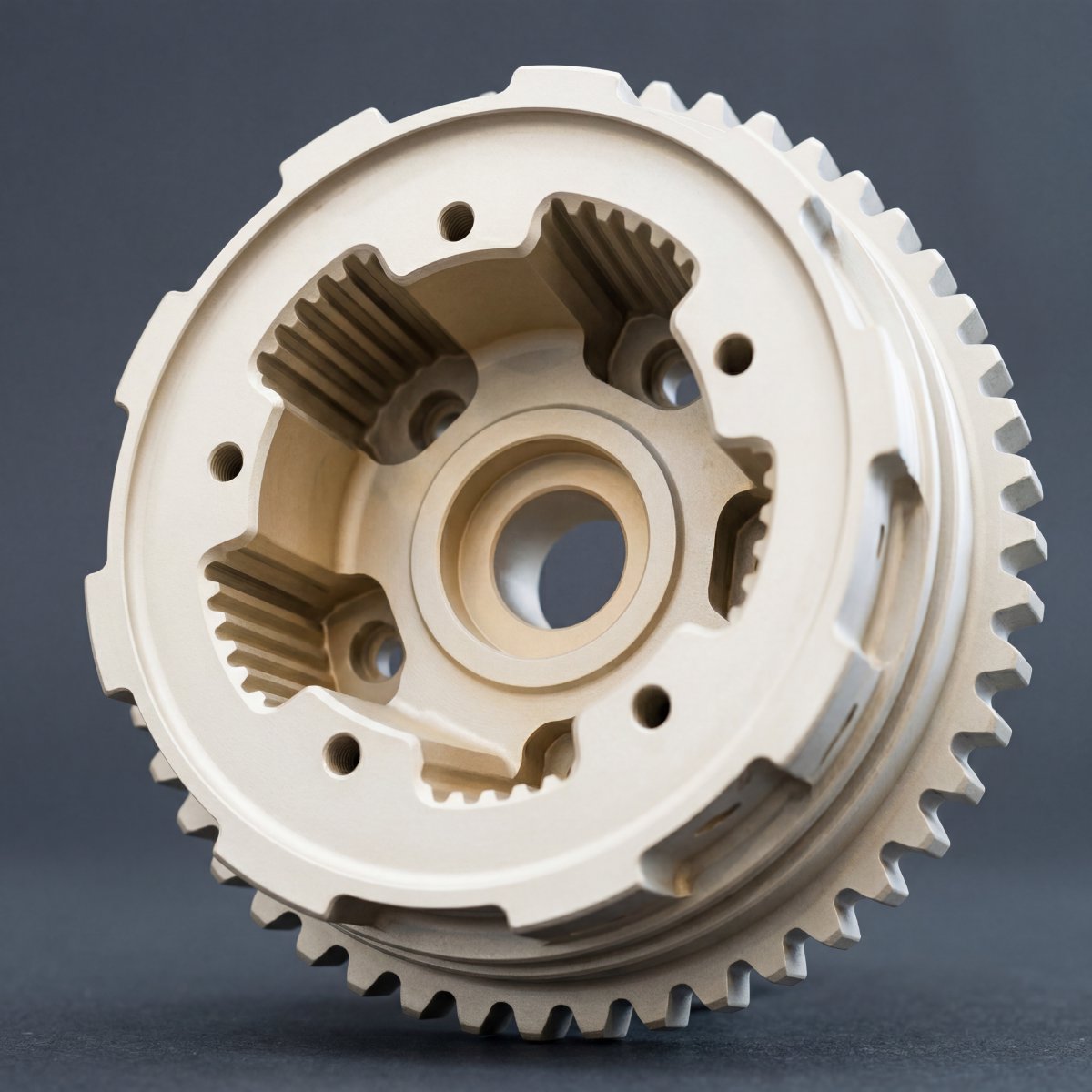
OX-UHA is a hard nanoceramic coating applied by a patented electro-chemical oxidation process.
OX-UHA provides high wear-, scratch- and corrosion resistance on Aluminium alloys (2XXX, 3XXX, 5XXX, 6XXX and 7XXX series). The ceramic grows inside the substrate, allowing application to complex shapes with high dimensional accuracy.
It can be used for mechanical applications as a superior alternative to hard anodising, plasma-sprayed ceramic coatings, or chrome and nickel coatings where maximum wear resistance is required.
ULTRA-HIGH HARDNESS
The OX-UHA coating achieves microhardness values of 1000–1800 Hv depending on the alloy, far exceeding conventional hard anodising treatments and making it suitable for the most demanding tribological applications.
EXCELLENT CORROSION RESISTANCE
The compact nanocrystalline Al₂O₃ layer protects aluminium alloys against corrosion in aggressive environments, achieving up to 1000 hours of salt spray resistance, depending on the alloy.
DIMENSIONAL ACCURACY
The ceramic layer grows inside the substrate, minimising dimensional change and ensuring good conformance even on complex geometries, internal channels, and precision parts.
WIDE ALLOY COMPATIBILITY
The treatment is compatible with all major aluminium alloy series: 2XXX, 3XXX, 5XXX, 6XXX and 7XXX, providing flexibility across a broad range of industrial applications.
TECHNICAL SPECIFICATIONS
Composition and applicable standards
| Chemical composition | |
|---|---|
| Nanocrystalline aluminum oxide Al₂O₃ – fully inorganic material. | |
| Phase composition | Crystallite size |
| Gamma and alpha phase aluminum oxide | 30–100 nm |
| RoHS compliance |
|---|
| RoHS compliant. No restricted substances present in amounts greater than the maximum tolerated concentrations. |
| REACH compliance |
|---|
| REACH compliant. No SVHCs present in amounts higher than 0.1% by weight. |
Treatable alloys
| Treatable alloys |
|---|
| Aluminum alloys |
| 2XXX, 3XXX, 5XXX, 6XXX and 7XXX series |
Coating thickness and aesthetic appearance
| Coating thickness | |
|---|---|
| Range | Note |
| 5–100 µm | Alloy and process dependent |
| The ceramic layer grows inside the substrate. Variable thickness depending on the geometry of the parts. Thickness is lower in holes and internal zones. | |
| Dimensional accuracy | |
|---|---|
| The ceramic layer grows inside the substrate. Can be applied to complex shapes with minimal impact on external dimensions. |
Tribological properties
| Microhardness | |
|---|---|
| The surface hardness of OX-UHA varies in accordance with the treated alloy. | |
| Hardness value | Note |
| 1000–1800 Hv | Alloy dependent |
| Friction coefficient | |
|---|---|
| Value | Conditions |
| 0.05–0.1 | Polished surface paired with steel in a standard lubricated environment |
| Wear resistance |
|---|
| Thanks to the high film hardness, the OX-UHA treatment offers outstanding wear resistance, achieving values superior to hard anodizing, PEO, and other conventional aluminum surface treatments. |
Chemical and physical properties
| Corrosion resistance | |
|---|---|
| The compact nanocrystalline oxide film of the OX-UHA treatment provides superior corrosion resistance compared to conventional anodizing, hard anodizing or chrome plating processes. | |
| Guideline corrosion resistance value | Note |
| Up to 1000 hours in salt spray | Alloy dependent – NSS to ISO 9227 |
| Operating temperature |
|---|
| > 500 °C, continuous. The fully ceramic, inorganic coating is stable at high operating temperatures. |
| Dielectric strength | |
|---|---|
| 50 V/µm |
| Thermal conductivity | |
|---|---|
| 7 W/mK |
| Adhesion to substrate | |
|---|---|
| > 300 MPa |
| Chemical resistance | |
|---|---|
| Indicative environmental compatibility values. Actual environmental resistance must still be tested in the field. | |
| Hydrocarbons (e.g. petrol, diesel, mineral oil, toluene) | |
| Alcohols, ketones (e.g. ethanol, methanol, acetone) | |
| Neutral saline solutions (e.g. sodium chloride, magnesium chloride, seawater) | |
| Dilute reducing acids (e.g. citric acid, oxalic acid) | |
| Concentrated acids (e.g. sulfuric acid, hydrochloric acid) | |
| Dilute bases (e.g. dilute sodium hydroxide) | |
| Concentrated bases (e.g. concentrated sodium hydroxide) | |
 Technical data sheet

