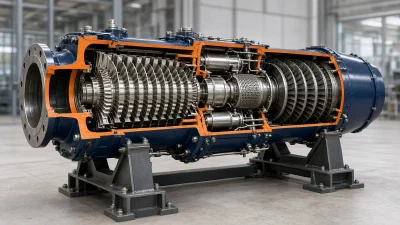
In power generation and process industries, gas turbines, centrifugal compressors and auxiliary systems operate with increasing pressure ratios, frequent washes and ever longer maintenance intervals. The choice of coating directly affects component life and the preservation of efficiency.
Electroless nickel plating (Ni-P), both conventional and composite, does not replace the ceramic coatings used in the hot section of a turbine. Instead, it finds its place in the cold section, in process compressors and in auxiliary circuits, with applications ranging from well-established industrial uses to newer solutions that are still being qualified.
Where Electroless Nickel Fits Among Current Coatings
Turbomachinery uses very different coatings, selected according to operating temperature and degradation mechanism:
- Hot section (combustors and turbine blades): thermal barrier coatings (TBCs) and high-temperature metallic coatings are used here. Conventional electroless nickel is not suitable for these exposures: between approximately 250 and 400 °C, the Ni-P alloy undergoes microstructural transformations that alter its hardness, ductility and chemical resistance (hardness and heat treatments
).
- Axial compressors of gas turbines: the most widespread standard is sealed aluminum-ceramic slurry coatings (for sacrificial corrosion protection and low aerodynamic roughness), supplemented by thin PVD coatings or thermal spray coatings where erosion is more severe. Here, composite electroless nickel-based systems are a recent area of development, of particular interest for anti-erosion inserts and specific geometries.
- Centrifugal process compressors and auxiliary systems: spray-applied organic or PTFE-based coatings offer good non-stick properties but tend to degrade under the impact of water, oil or solvent washes. In this area, high-phosphorus electroless nickel is already an established solution, often preferred over hard chrome on valves and pump bodies.
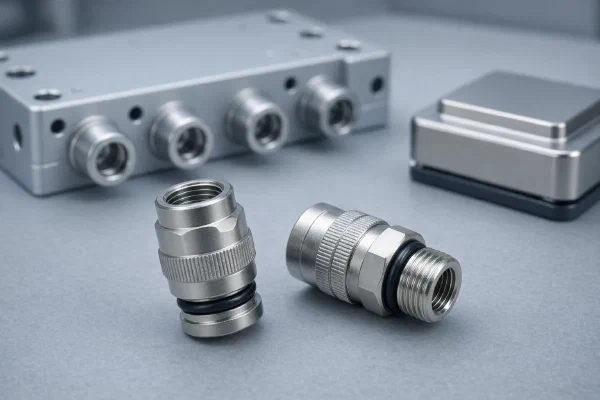
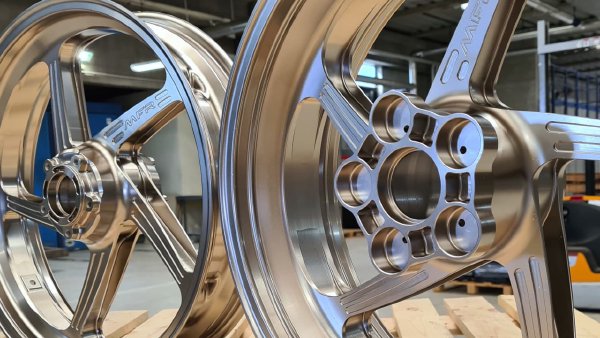
The process’s key strength across these applications is autocatalytic deposition without external current: since it is not a line-of-sight process, electroless nickel reaches even the internal channels of closed impellers, diaphragms, labyrinth seals, threads and valve seats with uniform thickness (dimensional tolerances and electroplating treatments
).
Established Applications and Emerging Developments
It is useful to distinguish between applications already established in the field and more recent composite solutions, which still require dedicated validation against the specifications of the individual machine.
| Area / Components | Main issues | NIPLATE® coating | Application status |
|---|
| Gas valves, pumps, manifolds, hydraulic actuators | Corrosion, pitting, wear on seats and internal passages | NIPLATE® 500
, NIPLATE® 600 | Established |
| Impellers, rotors and diaphragms of process compressors | Corrosion (H2S, CO2, chlorides), fouling, liquid washes | NIPLATE® 500
(high phosphorus) | Established |
| Compressor surfaces subject to severe fouling | Polymer deposits/scaling + erosion from washes | NIPLATE® 500 PTFE | Early adoption / R&D |
| Anti-erosion inserts and first compressor stages | Erosion from water droplet impact (WDE) and particulate matter | NIPLATE® 600 SiC
(also multilayer) | Under development / to be qualified |
| Hot-section combustors and blades | Oxidation and temperatures above 400 °C | Not suitable | Out of scope |
NIPLATE® Families for Turbomachinery and Auxiliaries
High phosphorus (NIPLATE® 500): chemical barrier and wash resistance
NIPLATE® 500
(P 10-13%, compliant with ISO 4527
and ASTM B733 Type V) has an amorphous structure with very low porosity that protects through a barrier effect in humid or saline environments or in the presence of acid gases. Compared with spray-applied organic coatings, the metallic matrix is far more resistant to erosion caused by water injection or wash cycles, while maintaining a smooth surface that facilitates the release of deposits.
Silicon carbide composite (NIPLATE® 600 SiC): erosion and severe wear
Where the impact of high-velocity water droplets (water droplet erosion) or solid particles causes conventional coatings to fail, the co-deposition of hard silicon carbide particles (>2000 HV) in the Ni-P matrix raises the composite hardness up to 1100 HV (NIPLATE® 600 SiC
). This technology also lends itself to multilayer configurations, for example a Ni-P sublayer for corrosion protection combined with a Ni-P/SiC surface layer against erosion. Such solutions must be qualified based on substrate, thickness and fatigue loading.
Antifouling composites (NIPLATE® 500 PTFE) and PFAS-free research
To further reduce the adhesion of deposits and polymers in process compressors, incorporating PTFE nanoparticles into the Ni-P matrix (NIPLATE® 500 PTFE
) combines low surface energy with mechanical resistance to washes. Meanwhile, research on composites (self-lubricating particles in electroless nickel
) is working on PFAS-free solutions such as hexagonal boron nitride (hBN), graphite or hybrid ceramic-lubricant systems, in order to maintain antifouling properties and thermal stability while remaining aligned with restrictions on fluoropolymers.
Design Considerations and Qualification Path
Adopting electroless nickel on rotating or pressure-bearing components requires defining a number of parameters at the specification stage:
- Substrate and pretreatment: carbon steels, alloy steels and martensitic or precipitation-hardening stainless steels (e.g. 13-15% Cr, 15-5PH, 17-4PH) require dedicated activation cycles to ensure high coating adhesion under dynamic loads.
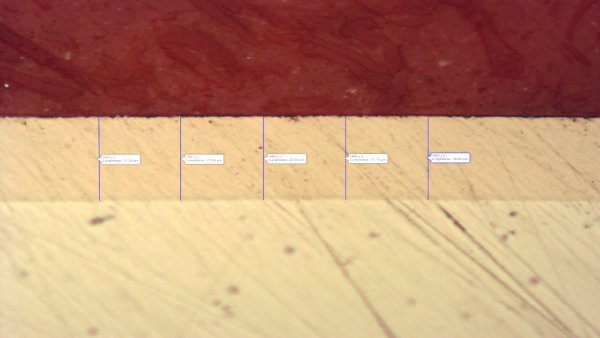
- Thickness and tolerances: depending on the severity of service, coating thickness typically ranges between 25 and 75 µm, taking into account the dimensional buildup on sealing seats, mating surfaces and threads.
- Post-deposition heat treatment: for high-phosphorus electroless nickel on compressors and components subject to corrosion or fouling, a low-temperature hydrogen embrittlement relief bake (~180-190 °C) is often preferred, as it preserves the amorphous structure, toughness and non-stick capability (whereas more aggressive thermal hardening increases hardness but may reduce chemical resistance and ductility). For PTFE composite electroless nickel (NIPLATE® 500 PTFE), however, a heat treatment at 280 °C is required to ensure coating adhesion.
Every machine combines fluid, temperature, peripheral speed and mechanical fatigue differently, so targeted sample preparation and qualification testing are always needed before industrial use. The in-house laboratory of Micron Coatings Group (quality and technical support
) supports materials engineering departments in fine-tuning the process and characterizing samples (thickness, phosphorus content, porosity, adhesion, microhardness and SEM-EDS morphological analysis), so as to validate the solution against design specifications.
Ing. Giacomo Bordiga
Quality Manager & Materials Engineer
Materials Engineer with over 15 years of experience in metal surface treatments. Specialized in electroless nickel plating, anodizing and quality management systems ISO 9001 and IATF 16949.