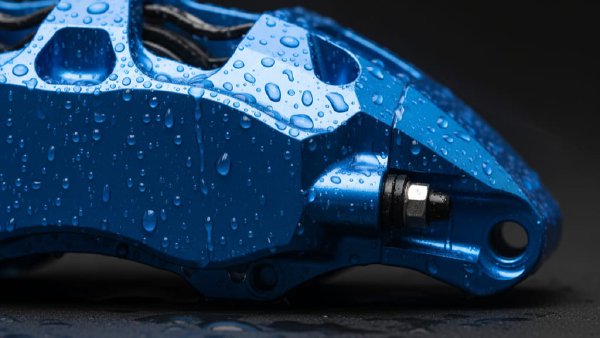
Hot and cold sealing of anodizing
Sealing anodized aluminum closes the pores of the oxide layer and is critical for corrosion resistance, color stability and durability. This page compares hot sealing and cold sealing (nickel salts).
Read MoreAluminum anodizing forms an oxide layer on the surface of the part: clear (ISO 7599) or hard (ISO 10074). Durox srl carries out OX-A, OX-HS and OX-W treatments. Here you will find the technical articles; for the service see the aluminum anodizing OX page or contact Durox srl
Sealing anodized aluminum closes the pores of the oxide layer and is critical for corrosion resistance, color stability and durability. This page compares hot sealing and cold sealing (nickel salts).
Read More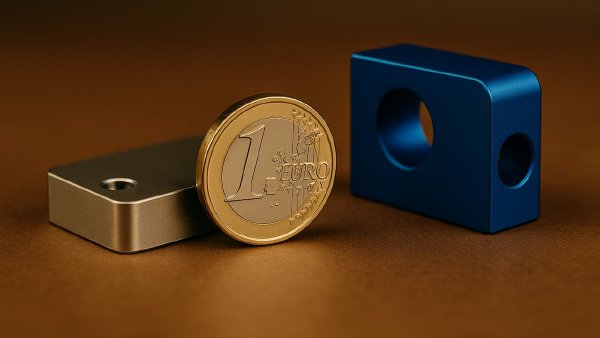
One of the most common questions we receive from those approaching a technical surface treatment for the first time is: “How much does it cost per kilo?” Whether we’re talking about electroless nickel plating or anodizing, the correct answer is: it depends.
Read More
Clean energy has become a top priority for governments and industries around the world, as reducing greenhouse gas emissions is essential to limiting the impact of climate change. In this context, hydrogen is emerging as a promising clean energy source for vehicles and beyond.
Read More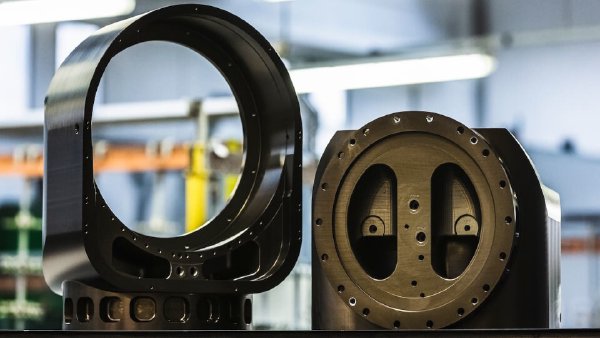
Hard anodizing of aluminum is a process that allows creating a layer of aluminum oxide on the material’s surface with hardness and wear resistance properties superior to those of natural or architectural anodizing.
Read More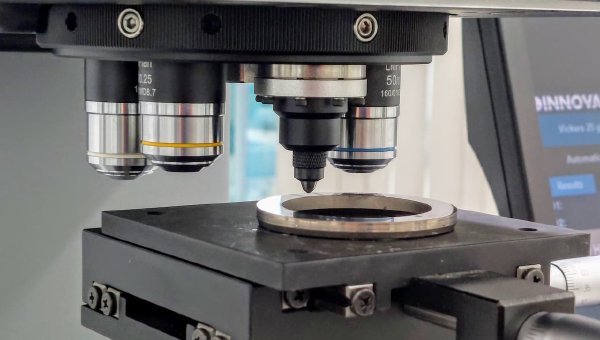
Free online converter between Vickers (HV), Rockwell C (HRC) and Brinell (HB, HBW), including HV to HRC and HRC to HV. Values are based on ASTM E140 data for non-austenitic steels (Table 1).
Read More
Hard anodizing of aluminum (Type III, covered by ISO 10074) forms a denser, more compact oxide layer than clear/decorative anodizing, intended for wear resistance, hardness and aggressive service conditions. Below: how the process works, how it differs from conventional anodizing, and typical industrial uses of hard-anodized aluminum.
Read More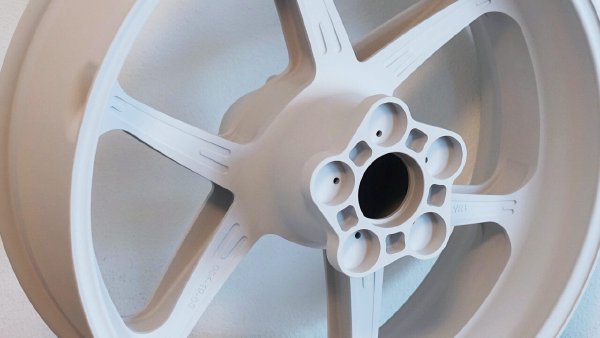
After the fall of the Berlin Wall, several Russian technologies were investigated by the Western world in the early 90s to assess their industrial applicability. These technologies came from Russian space and military research. Among the surface treatments for metals, electrolytic treatments called Plasma Electrolytic Oxidation PEO, also known as Micro-Arc Oxidation MAO, gained a certain amount of interest, as they made it possible to create an extremely hard and compact oxide layer on aluminum, magnesium and titanium using high-voltage current.
Read More
This guide compares clear (Type II) anodizing and hard (Type III) anodizing on aluminum: typical thicknesses, ISO 7599 / ISO 10074 and MIL references, and when each treatment is preferred for wear, corrosion or finish.
Read More
Aluminum is a metal widely used for the production of items that come into contact with food. Pots, pans, utensils, trays and foil are made of aluminum. Aluminum objects that come into contact with food are often protected through coating/painting or anodizing.
Read More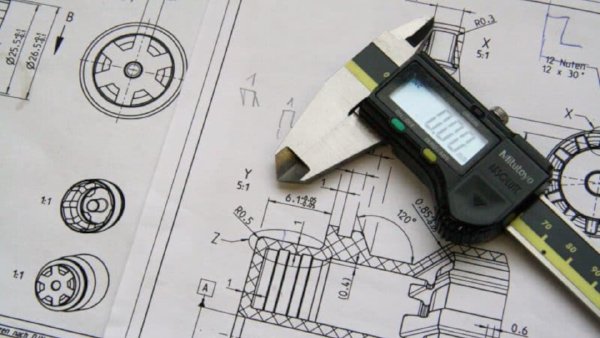
With the online calculator presented below, you can determine the dimensional
tolerances of shafts and holes.
This tool takes into consideration the coatings applied to mechanical parts,
allowing you to calculate the dimensional tolerances needed in pre-treatment
machining, in order to ensure the correct tolerance of the finished part after
surface treatment.